
What Local SEO for Small Business Really Means

This guide breaks down local SEO for small business owners into plain, practical steps no jargon, no guesswork, just what actually moves the needle.
Picture this. Someone’s phone dies on their way home from work, and their car starts making a noise it definitely shouldn’t be making. They pull over, borrow a charger, and type “brake repair near me” into Google. Three results pop up with a little map next to them. They call the first one. That’s it. That’s the whole decision. No research, no scrolling through page two, no asking a friend for a recommendation later. Just whoever showed up first, looked trustworthy, and was actually open.
That moment happens hundreds of times a day, in every town, for every kind of business a plumbing emergency, a craving for tacos, a sudden need for a dog groomer before a family visits. And whether your business is the one that shows up in that moment usually comes down to a handful of unglamorous, fixable things. That’s what local SEO actually is. It’s not a mysterious algorithm you need a marketing degree to understand. It’s making sure your business is the obvious, trustworthy answer when someone nearby is standing at that fork in the road.
If you run a small business, you’ve probably heard the term “local SEO” thrown around anyway. Maybe it was a marketing agency, a well-meaning friend, or some ad that popped up while you were trying to do literally anything else. And maybe you nodded along, then quietly wondered what local SEO for small business actually means for your bakery, your law office, your plumbing business, or your yoga studio.
Here’s the short version. Local SEO is how you make sure that when someone nearby searches for what you offer, your business is the one they find. Not the chain three towns over. Not your competitor with the flashier website. You.
The good news is that local SEO for small business isn’t reserved for companies with big marketing budgets. In a lot of ways, it’s the great equalizer. A small, well-run business with an accurate, active online presence can outrank a national brand for searches in its own neighborhood. Let’s walk through how.
Local SEO for Small Business Starts With Your Google Business Profile
If you do nothing else after reading this, do this: claim and completely fill out your Google Business Profile (GBP). It used to be called Google My Business. It’s the free listing that shows up when someone searches your business name, or searches for “plumber near me” and gets that map with three pinned businesses at the top. That’s called the Local Pack, and getting into it is often worth more than ranking on page one of regular search results.
A few things matter more than people expect here:
Fill in every single field. Hours, phone number, website, service area, attributes, description — all of it. An incomplete profile doesn’t just look unfinished. It actively signals to Google, and to potential customers, that your business might not be reliable.
Pick your category carefully. Your primary category is one of the strongest ranking factors you control. A general “Law Firm” listing performs very differently from a specific “Personal Injury Attorney” listing, even for the same business. Search for the term you actually want to rank for, and look at who’s showing up in the map results. Check what category they’ve chosen. Add secondary categories too if you’re a bakery that also serves coffee, add “coffee shop” so you catch both kinds of searches.
Keep your hours accurate, always. Nothing kills trust faster than a customer driving to a “closed” business that’s supposed to be open. Update seasonal and holiday hours before they change, not after someone’s already annoyed in your parking lot.
Add real photos, regularly. Profiles with photos get noticeably more calls and direction requests than those without. Skip the stock images customers can tell, and increasingly, so can Google. Real photos of your storefront, your team, your product, and your space build trust in a way generic images never will.
Match your NAP everywhere. NAP stands for Name, Address, Phone number. It needs to be identical across your website, your GBP, and every directory you appear on Yelp, Facebook, the Better Business Bureau, industry-specific directories. Small inconsistencies, like “St.” on one site and “Street” on another, genuinely confuse the systems that verify your business is legitimate.
Reviews Are Doing More Work Than You Think
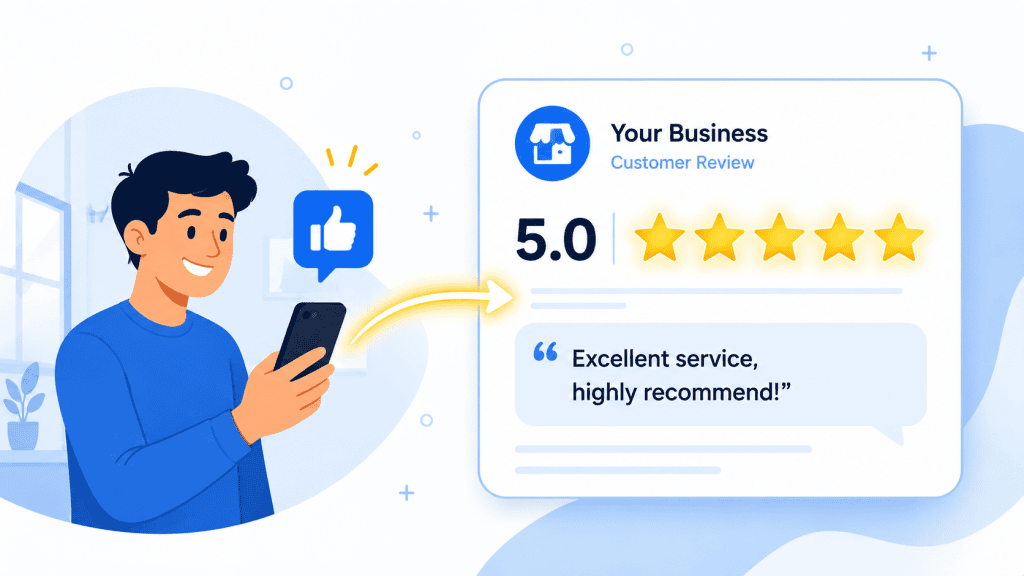
Reviews aren’t just a nice-to-have for your reputation. In local SEO for small business, they’re one of the strongest trust and ranking signals you have. But it’s not just about collecting five-star ratings. Consistency matters as much as volume. A steady trickle of new reviews over months tends to serve you better than one big push of fifty reviews followed by silence.
A simple system works better than sporadic effort:
- Ask for the review while the experience is still fresh ideally within a day or two of a positive interaction.
- Make it easy. Send a direct link. Every extra step someone has to take cuts your response rate significantly.
- A personal ask, like a text or an email with their name, converts far better than a generic mass message.
- Respond to reviews, good and bad, reasonably quickly. A thoughtful reply to a critical review often does more for your credibility than another five-star review would.
And don’t panic over the occasional negative review. A calm, professional, non-defensive response to criticism can actually build more trust than having no negative reviews at all.
Your Website Still Matters in Local SEO for Small Business
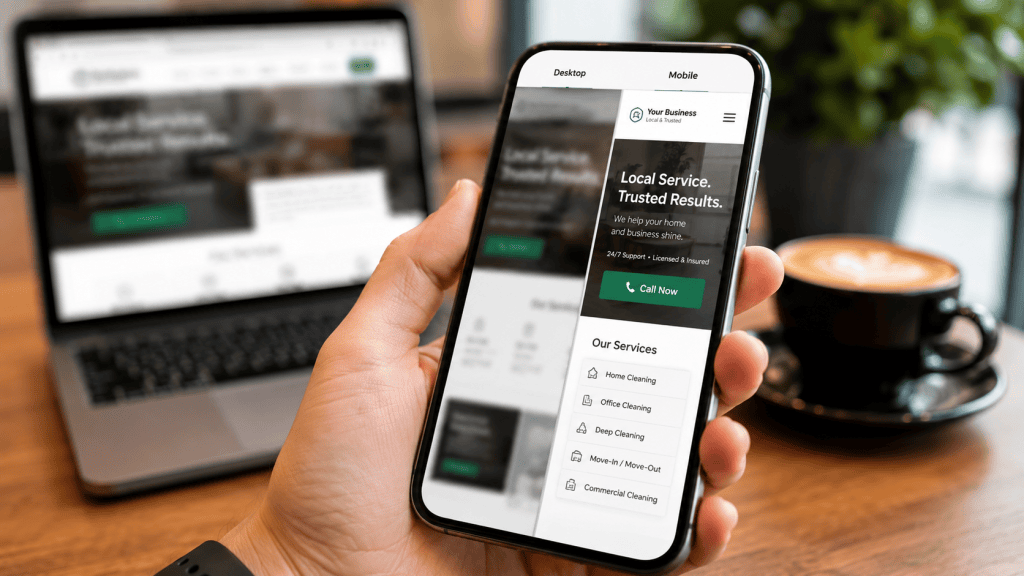
Your Google Business Profile might be the first thing people see. But your website is where they go to actually understand your business, and it needs its own local signals too.
Create location-specific pages if you serve multiple areas. A business serving three different towns should ideally have content that speaks to each of them. Don’t rely on one generic “service area” page that never mentions any of them by name.
Use local keywords naturally. Think about how people actually search “emergency electrician in [neighborhood]” or “best brunch spot near [landmark].” Let that language show up naturally in your page titles, headers, and body content. Don’t force it in a way that reads awkwardly.
Embed a map and list your NAP on your contact page. It sounds basic, but it reinforces the same consistency signals mentioned earlier. It also makes life easier for actual human visitors.
Make sure it works on a phone. A huge share of local searches happen on mobile, often while someone’s already out and about deciding where to go next. If your site is slow or clunky on a phone, you’re losing customers who were already halfway to choosing you.
Local Citations and Directories Quietly Build Your Credibility
A “citation” is just any online mention of your business name, address, and phone number. Think Yelp, Apple Maps, TripAdvisor, industry directories, or local chamber of commerce sites. They don’t feel glamorous, but they act like a web of confirmation. That web tells search engines your business is real, established, and where you say it is.
You don’t need to be listed everywhere. Focus on:
- The major general directories (Yelp, Bing Places, Apple Maps)
- Industry-specific directories relevant to your field (Houzz for contractors, Avvo for lawyers, OpenTable for restaurants, etc.)
- Local directories your city’s chamber of commerce, local business associations, community sites
Just make sure the information is identical everywhere. A mismatched phone number on one obscure directory probably won’t sink you. But consistency compounds in your favor over time.
Content That Actually Serves Local Customers
You don’t need a blog churning out generic articles no one asked for. What helps is content that answers real, local questions your customers are already asking — things like “how much does a kitchen remodel cost in [city]” or “what to expect at your first appointment.” This kind of content does double duty. It helps real people, and it gives search engines more relevant, locally-flavored material to associate with your business.
It’s also worth noting that search itself is changing. AI-generated summaries increasingly answer questions directly in the results, pulling from sources they consider trustworthy and consistent. A well-maintained Google Business Profile is often treated as more authoritative for practical details than a website is. That doesn’t make your website obsolete — it makes accuracy and consistency across both even more important.
Mistakes That Quietly Undo Your Progress
Even businesses that are doing a lot right can trip over a handful of avoidable mistakes with local SEO for small business. Knowing what to watch for saves you from undoing months of good work in a single misstep.
Keyword-stuffing your business name. It’s tempting to list your business as “Mike’s Plumbing Best Emergency Plumber in Denver” instead of just “Mike’s Plumbing.” Resist it. Google has gotten stricter about this over time. Profiles that try to game their name field risk suspension rather than a ranking boost. Your actual, legal business name builds trust; a keyword-stuffed one erodes it.
Ignoring the Q&A section on your profile. Anyone can post a question, or an answer, on your Google Business Profile including people who have never done business with you. Left unattended, this section can fill up with outdated or even incorrect information. Check it periodically, seed it with the questions customers actually ask, and answer them yourself from your business account.
Overextending your service area. If you’re a service-area business, it’s tempting to list every city within a few hours’ drive. Don’t. Google can tell when a listed area doesn’t match where your actual customers are. It will quietly reduce your relevance for all of them rather than reward the wider reach.
Letting your profile go stale. A business that hasn’t posted, added a photo, or updated a detail in over a year sends a signal. It suggests the business might not be fully active anymore, even if it’s thriving. Small, regular touches matter more than the occasional big overhaul.
Small, Steady Habits Beat One Big Push in Local SEO for Small Business
Local SEO isn’t a project you finish. It’s more like maintaining a storefront. A little consistent attention goes further than an occasional overhaul. A workable rhythm looks something like this:
- Weekly: Post an update on your Google Business Profile (a promotion, a new product, a recent project — doesn’t need to be fancy).
- Monthly: Audit your profile for outdated hours, services, or contact info. Check your recent reviews and respond to anything unanswered.
- Quarterly: Look at which searches are actually bringing people to your profile. Adjust your categories, services, or website content accordingly.
None of this requires a big budget or a marketing degree. It requires showing up consistently and keeping your information honest and current. Treat your online presence the way you’d treat your actual storefront swept, well-lit, and open for business.
The businesses that win at local SEO for small business usually aren’t the ones with the cleverest tricks. They’re the ones that simply show up, stay accurate, and keep at it longer than their competitors bother to.
Think back to that person on the side of the road with the noisy car. They didn’t pick a mechanic because of a clever slogan or a perfectly designed logo. They picked whoever felt closest, most legitimate, and easiest to reach in that exact moment. That’s really the whole game. Every field you fill out, every review you respond to, every photo you upload it’s all just you making sure that when your own version of that moment happens for someone nearby, you’re the name they see first, and the one they trust enough to call.

Need a partner to get your local search strategy on track? View our full range of services.