Think about the last time you wanted to buy something. Maybe you searched Google for the “best smartphone under ₹30,000,” watched a product review on YouTube, saw an Instagram ad, or received a promotional email offering a discount. This is digital marketing in action.
Without even realising it, you experienced digital marketing.
Introduction
Digital marketing is the process of promoting products, services, or brands using digital channels. Digital marketing is just about connecting with people. The internet is where everyone spends a huge chunk of their time anyway. Traditional marketing uses stuff like billboards and newspapers; digital marketing is completely different. We just use computers and phones to reach people where they’re already at, which is online. It’s really about using the internet to start a conversation; that is why it’s such a deal now. People are online 24/7 so it makes sense to try to reach them there, it helps businesses connect with people on a whole different level. The internet changed the way we do marketing, now we can talk to people directly no just putting up a billboard and hoping they see it.
Simple Example
Imagine you own a bakery in Delhi.
Instead of waiting for customers to discover your shop, you can:
- Create a website
- Show up on Google when people search “best bakery near me”
- Post delicious cake photos on Instagram
- Run Facebook advertisements
- Send birthday discount emails to customers
All of these activities are digital marketing.
Why Does It Actually Matter?

It’s easy to get lost in technical jargon, but the importance of digital marketing boils down to a few very human reasons
The Key Benefits of Digital Marketing:
- Meeting People Where They Are: When we think about meeting people where they’re most of us check our phones within minutes of waking up. We do this because we want to start our day by seeing what is going on. We use Google to research products before we buy them. We ask for recommendations on social media. If a business is not on these platforms it is like they do not exist to a consumer.
- A Level Playing Field: There is a level playing field now. In the past you needed a lot of money to compete with companies on TV or in magazines.. Now a small local shop can use a clever Instagram post or a well-written blog to reach the same audience as a big corporation.
- Precision (Not Guesswork): Digital marketing is about precision not guesswork. Traditional ads are like taking a chance. You hope the right person sees your ad.. With digital marketing you can be precise and show your ads to people who live in Seattle love hiking and are looking for new boots.
- Building Real Relationships: Digital platforms allow us to build relationships with our customers. When a customer leaves a comment or sends a message and we respond it creates trust and a sense of community. This is something that a printed ad cannot do.
- Measurable Results: We can see results, with digital marketing. We can see how many people clicked on our link how long they stayed on our page. If they actually bought something. This helps businesses stop wasting money on things that do not work and focus on what does. Digital marketing gives us results and this is very helpful.
How Does Digital Marketing Work?
Digital marketing works by attracting the right audience, engaging them with valuable content, and converting them into customers.
The 5-Step Digital Marketing Framework :
Step 1: Understand Your Audience
Every successful campaign begins with knowing your customers.
Businesses identify:
- Age
- Location
- Interests
- Problems
- Buying behavior
The better you understand your audience, the easier it becomes to create relevant marketing campaigns.
Step 2: Build Your Online Presence
Your website acts as your digital storefront.
A professional website should be:
- Fast
- Mobile-friendly
- Easy to navigate
- Secure
- Optimized for search engines
This becomes the central hub where customers learn about your business.
Step 3: Drive Traffic
Now it’s time to bring visitors to your website.
Traffic comes from multiple sources:
- Google Search
- Social media
- Paid advertisements
- Email campaigns
- Blog articles
- YouTube videos
The more targeted your traffic, the higher your chances of making sales.
Step 4: Convert Visitors into Customers
Getting visitors is only half the job.
Businesses encourage visitors to:
- Buy products
- Fill out contact forms
- Schedule appointments
- Download guides
- Subscribe to newsletters
This process is called conversion.
Step 5: Analyze and Improve
One of digital marketing’s biggest advantages is measurable results.
Businesses can track:
- Website visitors
- Clicks
- Leads
- Sales
- Conversion rates
- Return on investment (ROI)
Using this data, marketers continuously improve campaigns for better performance.
History and Evolution of Digital Marketing
The Beginning: The 1990s Was Pretty Basic
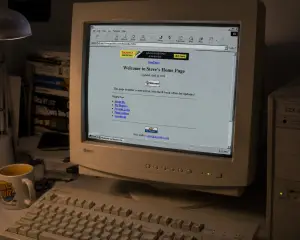
When the internet first came out in the 1990s, everything was really simple. Most users were just getting online for the first time. Companies, however, did not know how to use it. They had websites and email, but that was it. Visitors could go to a site to learn about a company or send an email if they had questions. It was easy. There were no graphics. There were no features. It was text and links. People were excited about the internet. It felt like something Then internet marketing was not a thing. Companies focused on marketing.
The internet was an addition, to their strategy. It was not the thing. Most business leaders did not understand how important the internet would become. They did not see it as a deal. The internet was a small part of their plan. Companies were still using ways to reach customers. The internet was something.
The Game Changer: The First Web Ad in 1994
Something big happened that changed everything. In 1994 the first clickable web advertisement showed up online. This might not seem like a thing to us now but back then it was a really big deal. Companies found out something that we think is obvious today. It was amazing at the time: they could actually see who clicked on their web advertisements. They could keep track of it. They could measure how well it was working.
This was a thing because it meant that companies had real information about whether their marketing was actually working for the first time ever. When you had a commercial, on television you had no idea if anyone actually bought something because of it.. With web advertisements you could see exactly how many people clicked on them. You knew what web advertisements were working and what web advertisements were not working. This ability to track and measure web advertisements changed everything. Suddenly companies started taking the internet very seriously as a way to market their products.
The 2000s: Google Arrived and Changed Everything

Fast to the 2000s and Google shows up. This is when digital marketing really started to matter. Google created a search engine that was really good and really useful so everyone started using it to find information.. That meant if your website was not on Googles search results your website was basically invisible. You could have the product in the world but if nobody could find your website when they searched for it what was the point of having the best product?
Suddenly companies realized that getting a spot on Googles search results was not just nice to have. It was essential for them. This led to a new field called search engine optimization or SEO. Businesses started putting a lot of money and effort into making sure they appeared on the page of Google results for the searches that mattered to them. If your website was not on that page your competitors were and they were getting all the attention from Google. Google made the rules for advertising and everyone else had to follow them or they would not do well with Google.
During this time online advertising got better and better. People figured out what keywords are and they learned how to pay for ads using Googles system. They saw that it is very powerful to reach people at the moment they are searching for something on Google. How easy it is to find your website on Google determines if your website does well or not. Google was the key, to making your website do well. People knew this about Google. They knew that Google was very important. Google was the one that decided if your website was successful or not.
Today: It’s All About Social Media and Phones
We are living in a different world now. Digital marketing is not really about websites and search engines anymore it is about media and the devices people carry with them everywhere. People are constantly on their phones checking Instagram scrolling through TikTok watching YouTube and messaging friends on WhatsApp. Your customers are not sitting at a desktop computer searching for information the way. They are lying in bed standing in line at a coffee shop or sitting on the couch. They are all using their phones to do everything.
This shift means that digital marketing had to change. Companies could not just put up a banner ad. Hope people would click it anymore. That approach does not work because people are just used to ignoring marketing ads now they have seen way too many of them. So marketing became about creating content that people actually want to see and engage with. It became about videos, storytelling, and messages that feels authentic and relatable to people.
Instead Of trying to interrupt people with annoying ads smart digital marketers started creating content that was so good or entertaining that people actually wanted to share it. They started having conversations with followers instead of just broadcasting at them. Your phone has become the device where digital marketing happens and every notification or video in your feed is a potential opportunity for digital marketing.
The Speed of Change Is Absolutely Mind-Blowing
It’s crazy how fast digital marketing has changed. We went from websites and email in the 90s to a huge ecosystem with many channels. In, than 30 years the way companies talk to customers has totally changed. What worked five years ago does not work today. Whatever is working now will probably be old soon. The 1990s were slow. Then the 2000s changed everything when Google became huge. Now things are moving faster. New platforms appear all the time. Algorithms change every week. New features get added overnight. To succeed in marketing today you need a new plan. The digital marketing world is always changing. You have to keep up. You’ll fall behind. Digital marketing needs your attention. You have to watch marketing all the time because it keeps changing. Digital marketing changes a lot.
Key Components of Digital Marketing
Digital marketing is really a beast, isn’t it? You are absolutely right. Most people think of marketing like a buffet where they just choose the one thing they like, usually Facebook ads or maybe just posting on Instagram, and they hope for the best.
To be honest, that is just setting yourself up for a headache. If your search engine optimisation is bad, those ads are just sending people to a website they cannot find later.. If you are doing a great job on social media, but your email list is not doing well, you do not actually own your audience. It is like trying to build a house with a hammer and no nails. You can swing that hammer all day. Nothing is going to stay together.
There are many small businesses putting all their money into one thing and then wondering why the leads are not converting into sales. It is frustrating to watch because they are so close, they just do not have the picture of digital marketing. It takes a lot of work to get your content, your ads, your email flows and your search rankings all working together. That is the only way to actually make digital marketing work for you and make it stick with digital marketing.
It’s like building a house with a hammer is pretty much impossible. You can swing that hammer all day long. Without nails, nothing is going to stay together.
You have to get digital marketing right. This means getting their content, ads, email flows, and search rankings all working together. Digital marketing is not something you do one time. Digital marketing is a process that takes time. You have to keep working on marketing to make digital marketing work for small businesses.
Search Engine Optimization (SEO)
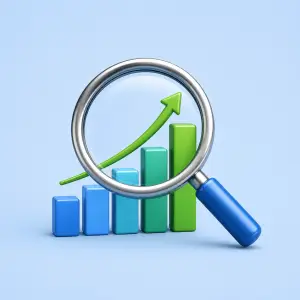
Search Engine Optimization is like trying to convince Google that you are the person, in the room. It is not magic or some secret code; it is just being logical. Think about it. When people are looking for a spot to grab a coffee or trying to figure out how to stop a pipe from spraying water everywhere they want the best answer right then and there. Google’s whole job is to find that. Your job is to make sure they know your website is the one they are looking for.
It sounds simple enough. People get Search Engine Optimization wrong all the time. They forget about the stuff or just put a bunch of keywords everywhere and hope for the best. You would be shocked at how many websites are just broken in ways that make it impossible for Google to even read them properly. If your website is not sound you are basically invisible.
The real thing that surprises people about Search Engine Optimization is that it takes a long time. People think they can just flip a switch and show up on the page tomorrow but it just does not work like that. It takes weeks, months depending on how tough your competition is. Search Engine Optimization is a marathon, not a sprint.. Honestly Search Engine Optimization is worth it. When someone finds you through search they are actually looking for you already. They are not just scrolling past they want what you are selling. That is why Search Engine Optimization matters much.
Content Marketing

Content marketing is really just the art of putting out stuff people actually give a damn about—like, stuff they’d actually wanna read or watch on purpose. Instead of just trying to force a sale, you’re providing info that helps them fix a headache or learn about something they’re already into.
Could be blog posts, quick videos, podcasts, or just whatever you’re posting on socials. The whole point is to build trust and show your audience you ain’t just some random person, you actually know your stuff. When people see your content keep popping up and it’s actually useful, they start to trust you a bit more. And trust, my friend, is pretty much the only thing that keeps a business relationship together.
The biggest mistake I see companies make is that they just churn out content just to say they did it. They put out some mediocre posts just to hit a quota for the week. I think that is a waste. Your content should be genuinely helpful. Match what your audience is actually looking for. You should always focus on quality over quantity always. That is the way it works.
Social Media Marketing
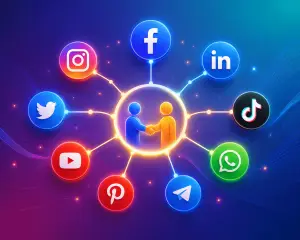
Social media is where People are spending a lot of time on these days. So it makes sense that you should be on media too. You can find the people who’re interested in what you do on Facebook, Instagram, TikTok, LinkedIn or Twitter. They are probably using least one of these social media platforms.
Social media is not about posting nice pictures and waiting for people to like them. It is about creating a community around your brand. You talk to the people who’re interested in your brand you answer their comments and you make content that makes them want to talk about your brand. Social media is also a place where you can show the people behind your business. You can share what is happening behind the scenes celebrate your employees or tell the story of your brand.
Email Marketing

People keep talkin’ like email marketing is dead, but honestly? They don’t have a clue what they’re on about. It’s still one of the best ways to actually get results in digital marketing, and it’s pretty simple once you get the hang of it. Just think about it for a second—your talking straight to folks who already decided they want to hear from you. That’s huge, man, you cant really beat that kind of access.
When someone takes the time to subscribe to your list they are basically giving you a key to their inbox. That is gold. You get to send them updates, some deals or just keep yourself relevant so they do not forget you exist. Just do not be that person who abuses it by spamming them with junk they do not care about. Nobody likes that.
You also need to organize your list. Do not just send the thing to everyone. People who pay you are looking for something, than people who just signed up yesterday. If you take the time to break your list into groups you can send stuff that actually speaks to them which makes a difference. Email marketing is great. Email marketing still works.
Pay-Per-Click Advertising (PPC)
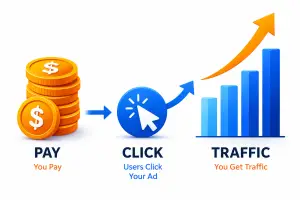
If SEO is that slow-burn, steady way to build up traffic, then PPC is basically the express lane. With PPC, your literally payin’ to get people onto your site. Whenever someone searches for a keyword you’ve bid on, your ad pops up, and yeah, if they click it, you gotta pay for that.
Google Ads is probably the big one everyone thinks of, but you got Facebook, Insta, and a bunch of others too. The cool thing about PPC is that you’re totally in control of the budget, you see stuff happening fast, and you can get super specific about who you’re targeting. If your in a space where the competition is crazy and it feels like you’ll never rank organically, PPC is a solid way to just jump in and get seen right away.
The biggest headache is honestly just burnin’ through your whole budget for nothin’. You really gotta know exactly who your talkin’ to, you know? You need to write ads that actually make people wanna click instead of just scrolling past. And your landing page? It’s gotta be solid, otherwise what’s the point? A bad PPC campaign can eat your money so fast it’s not even funny. If your not super careful, you’ll end up with absolutely zero leads and a lighter wallet. Campaigns like that can really wreck your business if you let ’em run wild. You just gotta be smart about it and stay on top of things so you don’t end up just throwing all your cash down the drain on a campaign that ain’t working.
Video Marketing
Video has become one of the most engaging forms of content. It is a digital marketing strategy that uses videos to promote a brand, product, or service, educate customers, build trust, and increase sales. These videos are shared across platforms like YouTube, Instagram, Facebook, LinkedIn, TikTok, company websites, and email campaigns to engage audiences and encourage them to take action.
Unlike text or images alone, videos combine visuals, sound, and storytelling, making them one of the most effective ways to capture attention and communicate a message.
Affiliate Marketing
Affiliate marketing is a performance-based digital marketing strategy where individuals or businesses (called affiliates) promote another company’s products. In exchange, they earn a commission for every sale, lead, or action generated through their unique link. Rather than paying for advertising upfront, businesses only pay affiliates when they deliver results. This makes affiliate marketing a cost-effective way to increase sales and reach new customers.
Analytics and Data
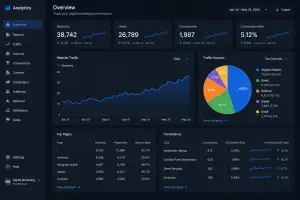
Digital marketing is really about the numbers. That is why digital marketing analytics and digital marketing data analysis are so important. You have to keep an eye on everything that is happening with your website like how many people’re visiting your website and what people are doing when they get to your website.
You need to know what is working and what is not working, like how people’re finding your website. Are people coming to your website from Google or from Facebook. Think about whether they just typing in your website address. Are people looking around your website. Conversely are they leaving your website quickly? Finally, you should ask if they are actually completing the actions you want, like buying a product or signing up for your newsletter.
Benefits of Digital Marketing
Businesses invest in digital marketing because it offers numerous advantages:
- Cost-effective marketing
- Better customer targeting
- Higher return on investment
- Real-time performance tracking
- Increased website traffic
- Stronger customer engagement
- Greater brand awareness
- Scalable campaigns for businesses of all sizes
Even small businesses can compete with larger companies by using smart digital marketing strategies.
Common Digital Marketing Tools
Professional marketers often use tools like:
- Google Analytics
- Google Search Console
- Google Ads
- Meta Ads Manager
- Canva
- Ahrefs
- SEMrush
- Mailchimp
- HubSpot
These platforms help manage campaigns, analyze data, and improve marketing performance.
Final Thoughts
Digital marketing is no longer optional—it’s an essential part of building a successful business in today’s connected world. From improving your visibility on search engines to engaging customers on social media and measuring every campaign’s performance, digital marketing gives businesses the tools to grow smarter and faster.
The best part is that you don’t need a massive budget to get started. By understanding your audience, creating valuable content, and choosing the right channels, even a small business can build a strong online presence and compete with larger brands.
Whether you’re just beginning or looking to expand your existing business, investing in digital marketing is one of the smartest decisions you can make for long-term growth.
Connect with Us – Digital Dreamweavers