Remember the days when a business’s marketing strategy meant a newspaper ad, a few pamphlets, and maybe a billboard if the budget allowed? Those days aren’t completely gone, but they’ve been pushed to the background by the rise of Digital Marketing. Today, if your business doesn’t show up on Google, isn’t active on Instagram, and doesn’t have someone tracking clicks and conversions, you’re essentially invisible to a huge chunk of your potential customers.
That’s the world digital marketing has built. And whether you’re a business owner trying to figure out where to spend your next marketing rupee or someone thinking about a career in this field, understanding digital marketing properly (not just the buzzwords) is no longer optional.
Let’s break it all down — from the basics to every major channel you’ll actually use.
1. Introduction to Digital Marketing
What is digital marketing?
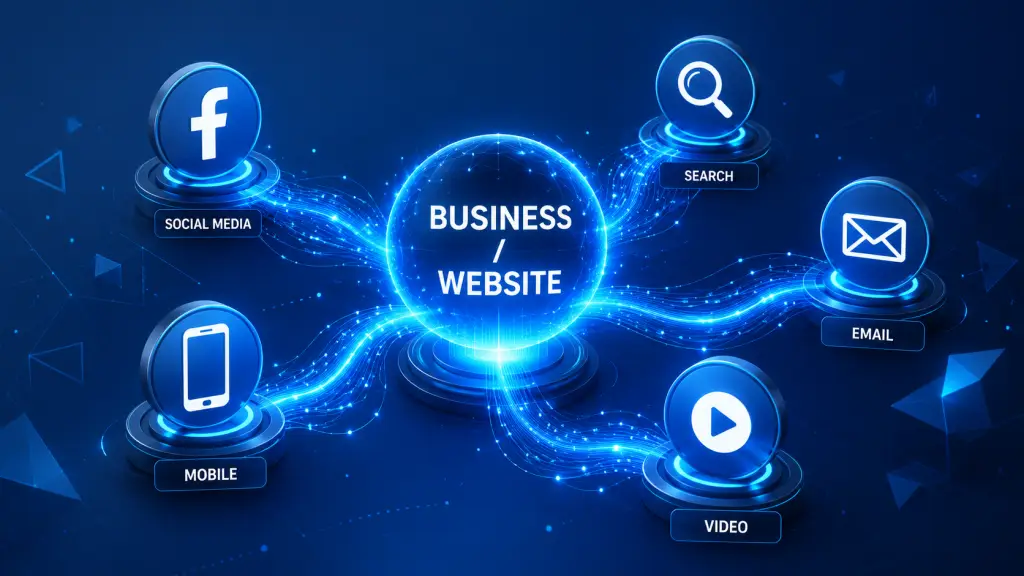
In the simplest terms, digital marketing is the practice of promoting products, services, or brands using digital channels, such as search engines, social media, email, websites, and mobile apps instead of traditional offline methods like print, TV, or radio.
Why every business needs digital marketing today
Here’s the thing your customers are already online. They’re scrolling Instagram during lunch breaks, Googling “best XYZ near me” before making a purchase, and comparing prices across five browser tabs before deciding. If your business isn’t present in these spaces, someone else’s is, and they’re getting the sale you could have had.
Digital marketing isn’t just an “extra” anymore. For small businesses, it’s often the only way to compete with bigger players without needing a bigger budget. For established companies, it’s how they stay relevant, protect market share, and keep growing.
How AI and changing customer behavior have transformed marketing
A few years ago, digital marketing was mostly about posting content and running a few ads. Now, AI tools write ad copy, predict which customers are most likely to convert, personalize emails at scale, and even manage chatbot conversations that feel almost human. At the same time, customers have become far more selective they skip ads, block pop-ups, and trust recommendations from real people (or influencers) more than brand messaging alone.
This shift means marketing today has to be smarter, faster, and a lot more personal than it used to be.
2. What is Digital Marketing?
Definition
Digital marketing refers to all marketing efforts that use an electronic device or the internet. Businesses use digital channels such as search engines, social media, email, and websites to connect with current and prospective customers.
Traditional marketing vs. digital marketing
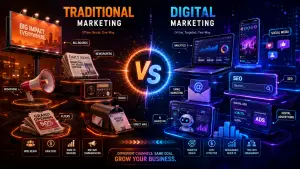
| Traditional Marketing | Digital Marketing |
|---|---|
| One-way communication (TV, print, radio) | Two-way, interactive communication |
| Hard to measure results accurately | Every click, view, and conversion is trackable |
| Expensive, especially for small businesses | Flexible budgets, even a few hundred rupees, can work |
| Broad targeting (everyone sees the same ad) | Precise targeting by age, location, interest, and behaviour |
| Slow to launch and adjust | Campaigns can be launched and tweaked within hours |
For example, a local bakery putting up a hoarding is traditional marketing; thousands of people might see it, but there’s no way to know who actually walked in because of it. If the same bakery runs a Facebook ad targeting people within a 5 km radius who are interested in desserts, they can track exactly how many people clicked, visited the store’s page, or placed an order.
Why businesses prefer digital channels
It comes down to three things: measurability, affordability, and precision. A business can spend ₹500 on a Google Ad and know within a day whether it worked. Try doing that with a newspaper ad.
3. Why Digital Marketing is Important
Global reach
A small handmade jewellery business in Jaipur can sell to a customer in Mumbai, Dubai, or even London all through an Instagram shop or a website. Geography stops being a limitation.
Cost-effective marketing
You don’t need lakhs of rupees to start. Many businesses begin with a few thousand rupees on social media ads and scale up as they see results.
Better ROI
Because everything is trackable, businesses can see exactly how much revenue came from a specific campaign, allowing them to cut what doesn’t work and double down on what does.
Real-time analytics
Platforms like Google Analytics, Meta Ads Manager, and Google Ads dashboards show live data impressions, clicks, and conversions so decisions don’t have to wait until “next quarter.”
Targeted audience
Instead of showing an ad to everyone, digital marketing allows businesses to target a 25-year-old woman in Delhi interested in skincare, or a 40-year-old man in Bangalore looking for home loans.
Brand awareness
Consistent presence across search, social, and content builds familiarity, and familiarity builds trust over time.
Lead generation
Forms, landing pages, and gated content (like free ebooks or guides) help capture potential customer information for follow-up.
Customer engagement
Comments, DMs, reviews, and interactive content let businesses build real relationships with their audience, not just broadcast at them.
4. Types of Digital Marketing
Search Engine Optimization (SEO)
SEO is the process of improving a website so it ranks higher on search engines like Google, without paying for ads.
- On-page SEO: Optimizing individual pages titles, headings, content, images, internal links so search engines understand what the page is about.
- Off-page SEO: Building authority through backlinks, guest posts, and mentions from other credible websites.
- Technical SEO: The behind-the-scenes stuff site speed, mobile-friendliness, secure connections (HTTPS), and clean site structure that helps search engines crawl and index a site properly.
- Local SEO: Optimizing for “near me” searches, mainly through Google Business Profile, local reviews, and location-specific keywords. Critical for restaurants, clinics, salons, and local shops.
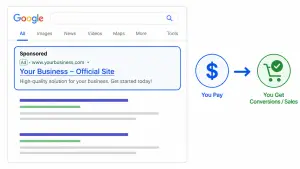
Pay-Per-Click (PPC)
PPC is advertising where businesses pay only when someone clicks their ad.
- Google Ads: Text ads that appear at the top of search results when someone searches a relevant keyword.
- Bing Ads: Similar to Google Ads but on Microsoft’s search engine often cheaper with less competition.
- Display Ads: Visual banner ads shown across websites in the Google Display Network, great for brand visibility.
- Remarketing: Showing ads to people who already visited your website but didn’t convert that pair of shoes that “follows you” around the internet? That’s remarketing.
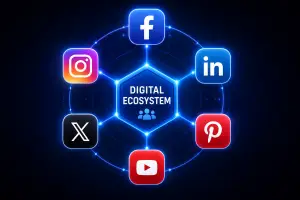
Social Media Marketing
Different platforms, different purposes:
- Facebook: Broad reach, great for community building and detailed ad targeting.
- Instagram: Visual storytelling, Reels, and influencer-friendly, ideal for lifestyle, fashion, food, and beauty brands.
- LinkedIn: B2B marketing, professional networking, and thought leadership content.
- X (formerly Twitter): Real-time conversations, news, customer service, and brand personality.
- Pinterest: Visual discovery platform, strong for DIY, home decor, fashion, and recipe content.
- YouTube: Long-form and short-form video content, tutorials, reviews, and brand storytelling.
Content Marketing
Creating valuable content to attract and retain an audience, rather than directly pitching a product.
- Blogs: Build organic traffic and establish authority on a topic (like this one!).
- Videos: Highly engaging, great for tutorials, testimonials, and product demos.
- Infographics: Simplify complex information into shareable visuals.
- Case studies: Show real results and build credibility with potential clients.
- Whitepapers: In-depth, research-backed documents often used in B2B marketing to generate quality leads.
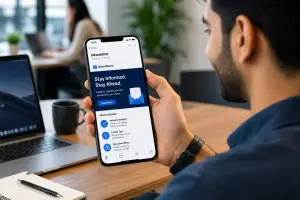
Email Marketing
Still one of the highest ROI channels available.
- Newsletters: Regular updates that keep a brand top-of-mind.
- Promotional emails: Sales, discounts, and limited-time offers.
- Automated email sequences: Pre-set emails triggered by user actions, like a welcome series for new subscribers.
- Lead nurturing: Gradually building trust with potential customers through valuable, consistent emails until they’re ready to buy.
Affiliate Marketing
In affiliate marketing, businesses partner with affiliates (individuals or other websites) who promote their products using a unique tracking link. Every time someone makes a purchase through that link, the affiliate earns a commission. It’s performance-based no sale, no payout which makes it low-risk for businesses and a popular income stream for bloggers, YouTubers, and content creators.
Influencer Marketing
Leveraging people with an engaged online following to promote products or services.
- Micro-influencers: Typically 10K–100K followers, but with highly engaged, niche audiences often more trusted and cost-effective for smaller brands.
- Macro-influencers: Larger followings (100K+), offering wider reach, often used by bigger brands for mass visibility.
- Brand collaborations: Long-term partnerships where influencers become recurring faces of a brand, building deeper audience trust over time.
Mobile Marketing
With most internet usage happening on phones, mobile marketing has become essential.
- SMS marketing: Direct, high open-rate messages for offers, reminders, or updates.
- App notifications: Push notifications that re-engage users who’ve already downloaded a brand’s app.
- Mobile-first websites: Websites designed to load fast and function smoothly on mobile screens first, since that’s where most traffic comes from today.
Wrapping It Up
Digital marketing isn’t one single thing it’s a whole ecosystem of channels working together. SEO brings organic visibility, PPC brings instant traffic, social media builds relationships, content builds trust, and email keeps the conversation going long after the first interaction.
The businesses winning right now aren’t necessarily the ones with the biggest budgets they’re the ones who understand their audience and use the right mix of these channels consistently. And with AI now making personalization, automation, and targeting sharper than ever, the businesses that adapt early will be the ones that pull ahead.
Whether you’re a business trying to grow or someone building a career in this space, the fundamentals covered here are the foundation everything else is built on. Master these, and the rest becomes a lot easier to navigate.
Feeling overwhelmed by the 2026 marketing landscape? I can help you build your own digital ecosystem. Contact me for a strategy audit or for our weekly newsletter , bite-sized digital marketing tips.
To help you master specific areas of marketing, check out these guides:
What is SEO? A Beginner’s Guide to Ranking Higher – Learn the foundational techniques to boost your organic search visibility.

Hi, this is a comment.
To get started with moderating, editing, and deleting comments, please visit the Comments screen in the dashboard.
Commenter avatars come from Gravatar.